Love historic homes and waterfront views? El Cid in West Palm Beach blends both with timeless style, lush streetscapes and a rich 1920s story. If you appreciate original details and careful craftsmanship, this neighborhood gives you plenty to love. In this guide, you’ll learn how to spot the key home styles, what preservation rules mean for renovations, and how to tour properties like a pro. Let’s dive in.
Where El Cid fits in West Palm Beach
El Cid is a locally and nationally recognized historic district with boundaries generally along Flamingo Drive to the north, South Flagler Drive to the east, Dyer Road to the south and South Dixie Highway to the west. It was listed on the National Register of Historic Places on August 31, 1995, for its architecture and community planning significance. The nomination documents 281 contributing properties, with most construction between the early 1920s and 1945. You will find a deliberate, cohesive streetscape with high architectural integrity across a range of home sizes.
For a deep dive into the neighborhood’s historic record, review the National Register nomination for the El Cid Historic District, which outlines boundaries, styles and notable examples in detail. You can view the official documentation in the National Park Service archive for El Cid.
Signature home styles
Mediterranean Revival essentials
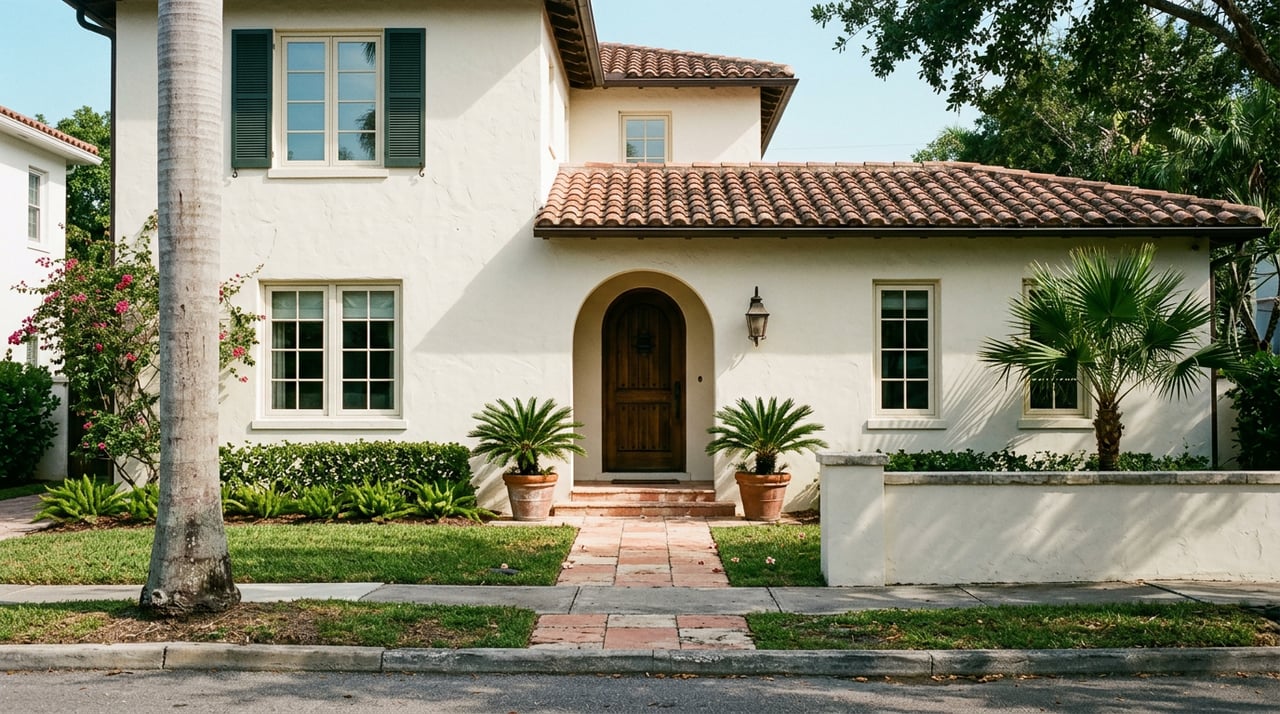
Mediterranean Revival is the dominant style in El Cid, appearing in both modest residences and larger mansions. Look for smooth stucco walls, red or terra-cotta barrel tile roofs, round-arched windows and doors, and arched loggias or recessed courtyards. Many homes feature wrought-iron balconies, decorative tile and asymmetrical façades. Architecture fans often point to the Woodall House at 229 Belmont Road as a strong local example with an ornamented entrance, ceramic tile roofing and ironwork noted in the National Register nomination.
Mission style cues
Mission or Spanish Mission homes share the stucco-and-tile palette but with simpler lines. You will notice shaped or curvilinear parapets, round-arched openings and restrained detailing. An example cited in the nomination is 220 Almeria Road. These homes deliver classic character with a more minimal presence from the street.
Monterey and Colonial Revival touches
Scattered Monterey-style houses introduce second-story balconies, often cantilevered, paired with low-pitched gables. Colonial Revival appears in some later buildings with balanced façades, multi-pane double-hung windows and pedimented entries. These styles add variety while staying visually compatible with El Cid’s core look.
Bungalow and Craftsman warmth
A handful of Bungalow and Craftsman homes offer low-slung rooflines, wide front porches and exposed rafters. They bring a cozy, early 20th-century feel and often blend well with the district’s stucco finishes and lush plantings.
Art Deco and Moderne notes
Occasional Art Deco or Streamline Moderne examples show up, sometimes blending with Spanish or Mediterranean details. Expect sleek lines and simplified ornament from the 1920s through the 1940s.
Streetscape and lot patterns
Most homes in El Cid are one to two stories, with a mix of modest residences and estate-scale properties. Double-lot parcels are common, which gives many streets a gracious, open feel. Materials repeat across the district: stucco finishes, clay or ceramic tile roofs, and concrete foundations that anchor the neighborhood’s signature look.
Expect period details like arched entries, multi-light casement or double-hung windows set deep in the wall, heavy wooden doors and ornate ironwork. Along South Flagler Drive, waterfront-facing properties take advantage of the Intracoastal with terraces, outdoor rooms and views framed by palms and hedges. The result is a tropical, mature canopy that complements the architecture.
Buying and renovating in a historic district
Certificate of Appropriateness basics
Because El Cid is a designated historic district, most exterior work that changes the appearance requires a Certificate of Appropriateness (COA) from the City of West Palm Beach. Routine projects may receive staff-level review, while larger additions or significant alterations go to the Historic Preservation Board. Read the City’s Historic Preservation FAQs to understand thresholds and submittal needs.
Common upgrade items in 1920s homes
Many homes date to the 1920s, so budget for modern mechanicals like HVAC, electrical and plumbing. Roof repair or replacement can be higher if you are matching historic clay tile. Windows and doors typically need attention that balances hurricane performance with a historically compatible appearance.
Flood and coastal planning
El Cid borders the Intracoastal along South Flagler Drive, so flood awareness is smart due diligence. Check the City’s Flood Information and mapping resources for FEMA panel updates, elevation requirements and potential insurance needs, especially for waterfront properties and projects that change site grades or drainage.
Smart, compatible updates
Good news for design-minded buyers: modern features like impact glass, solar panels and updated HVAC are often permitted if they are sited to reduce street visibility and use compatible materials. New additions are generally required to be subordinate in scale and to read as new without mimicking original fabric. Start early with the City’s guidance on How to Make Changes to Your Property to streamline approvals.
How to tour homes like a pro
Bring a discerning eye to period details and long-term maintenance. Use this quick checklist:
- Roof: condition of clay or ceramic tiles, signs of patching or mismatched areas.
- Stucco: uniform texture, hairline cracks, and evidence of prior repairs.
- Windows/doors: original casements or sympathetic replacements, weatherproofing and operation.
- Courtyards/loggias: drainage, waterproofing and tile condition.
- Lot scale: single vs. double lot, privacy hedges and tree canopy.
- Waterfront sites: seawall condition, dock integrity and visible elevation measures.
Lifestyle and nearby culture
El Cid enjoys a prime location just south of downtown, with easy access to museums, dining and shopping. Inside the district, the Ann Norton Sculpture Gardens on Barcelona Road is a beloved cultural anchor set within lush grounds. A short drive or bike ride brings you to the Norton Museum of Art, a major regional arts destination.
Along South Flagler Drive, some properties leverage direct Intracoastal views, outdoor rooms and, where applicable, private docking. These features can shape your outdoor living plans and maintenance priorities. For neighborhood events and community resources, the El Cid Historic Neighborhood Association is a helpful reference.
Why work with Micah Volmer
You deserve a partner who knows the architecture, the approval process and the lifestyle that make El Cid special. As a Palm Beach County residential advisor with Compass, I pair boutique, high-touch service with powerful marketing and transaction tools. Sellers can elevate presentation with Compass Concierge, while buyers get attentive guidance on style fit, condition and approvals in a historic context.
If El Cid is on your list, let’s curate the right homes, align your renovation plan with local rules and position you to move with confidence. Start your next step with Micah Volmer for tailored advice and a clear plan.
FAQs
What makes the El Cid Historic District significant?
- El Cid is listed on the National Register of Historic Places for its 1920s-era community planning and architecture, documented in the official nomination.
Which architectural style is most common in El Cid?
- Mediterranean Revival is the predominant style, with many homes showing stucco walls, barrel tile roofs, arches, courtyards and wrought-iron details.
Do you need approval to change a home’s exterior in El Cid?
- Yes, exterior changes that alter appearance typically require a Certificate of Appropriateness from the City’s Historic Preservation program per the FAQs.
Are El Cid homes affected by flood considerations?
- The eastern edge fronts the Intracoastal, so buyers should consult the City’s Flood Information for mapping, insurance and elevation guidance.
How old are El Cid homes and what are common materials?
- Most contributing homes were built in the 1920s through 1945, with stucco finishes, clay or ceramic tile roofs and concrete foundations documented in historic records.
Which ZIP code covers El Cid addresses?
- Official sources and local institutions commonly reference 33401 for El Cid addresses, while 33411 does not correspond to this neighborhood.
Where can you learn more about El Cid’s styles and examples?
- Review the National Park Service nomination and visit the El Cid Historic Neighborhood Association for history and community resources.