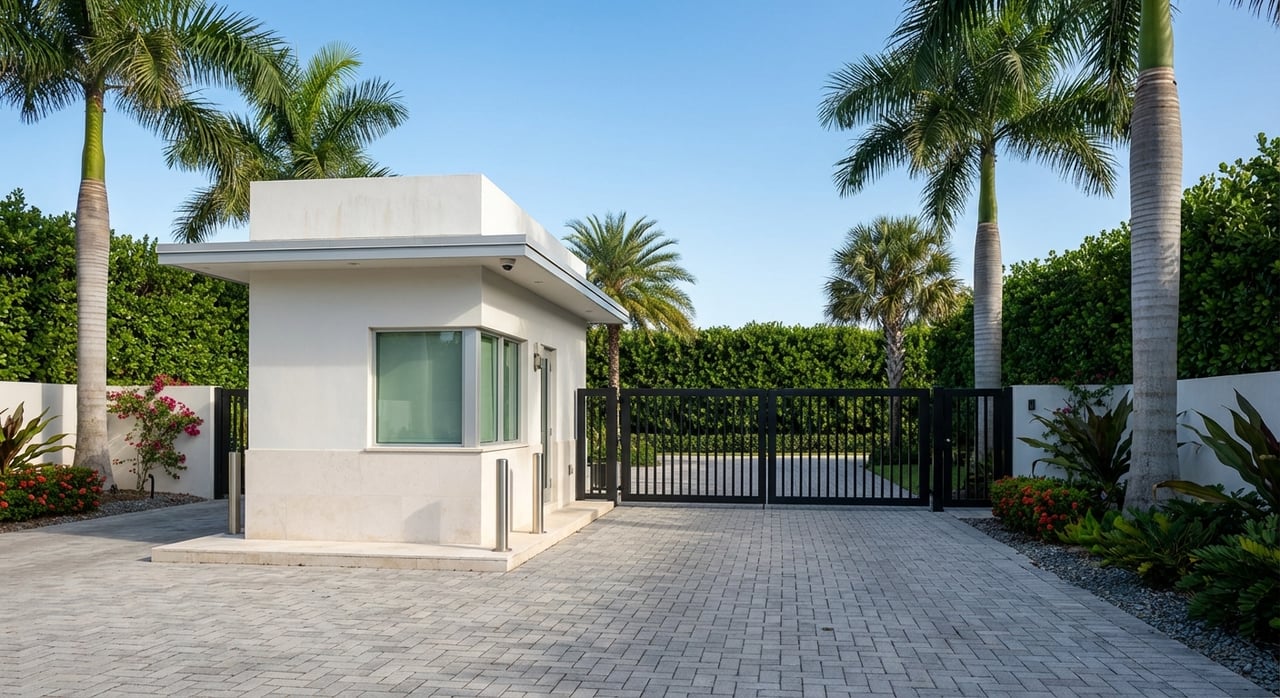
Thinking about life behind the gates in Palm Beach Gardens? You are not alone. Many buyers come for the privacy, curb appeal and resort-style amenities that define much of North County living. In this guide, you will learn how gated communities here are organized, what they really cost, which rules matter, and the due diligence that helps you buy with confidence. Let’s dive in.
Why Palm Beach Gardens fits gated living
Palm Beach Gardens has a strong base of owner-occupied homes and higher local incomes, which supports demand for amenity-rich, well-managed communities. The U.S. Census Bureau reports a 2024 median household income of about $106,947 and an owner-occupancy rate near 73 percent. You will see that reflected in the number of master-planned and club-style neighborhoods in and around the city. Census quick facts confirm these figures.
The city also sits in a higher-priced slice of the Palm Beach County market. Vendor-reported snapshots can differ because some track list prices and others track closed sales. Treat any single number as a snapshot. When you compare neighborhoods, check at least two current data sources and note the date for each stat.
What gated communities look like here
Master-planned vs. club-style
You will typically find two formats in Palm Beach County:
- Master-planned communities with an HOA that maintains common areas and enforces use rules.
- Club-style or country-club communities where a private club offers golf, dining and social programs. Club membership can be optional or mandatory and often has initiation fees and separate dues.
Planning research groups gated neighborhoods into lifestyle, prestige and security typologies, which can help you clarify your goals. If you want amenities and social events, you may lean lifestyle. If golf and dining are central, prestige or club-focused settings tend to fit. If you prioritize controlled access, security-oriented layouts may appeal. See an overview of these typologies in peer‑reviewed planning literature.
Common amenities and services
Many Palm Beach Gardens gated communities include some mix of:
- Clubhouse, pool and fitness center
- Tennis and pickleball courts
- Parks, walking trails and enhanced landscaping
- Controlled entrances with resident and guest protocols
- On-site or contracted management for common areas
In club-style communities, confirm which amenities are covered by the HOA dues and which require a separate club contract. Initiation fees and recurring club dues are common and can be material.
Governance basics: HOAs and CDDs
Most gated neighborhoods here are governed by an HOA that operates under Florida’s Homeowners’ Association statute. The governing documents set member obligations, assessment rules and use restrictions. You can review key owner rights and association requirements in Florida Statutes Chapter 720.
Some master-planned communities also use a Community Development District, or CDD. A CDD is a special-purpose unit that can issue bonds and levy non-ad valorem assessments on your property tax bill to fund roads, utilities or amenities. Learn how CDDs work in Florida Statutes Chapter 190, and note that state law requires disclosure when a CDD may impose assessments.
The real costs to budget
Gated living often carries several recurring payments. Build a full cost picture before you fall in love with a property.
- HOA assessments. These can be monthly or quarterly and vary based on services included, such as security, landscaping and amenities.
- Club initiation and dues. In club-style communities, these are separate from HOA dues. Membership may be optional or required.
- CDD assessments. If the property lies inside a CDD, expect a separate line on your annual tax bill.
- Property insurance and flood coverage. Premiums in South Florida are elevated and can vary widely by carrier and risk profile.
- Special assessments. Associations may levy one-time charges for major repairs or capital projects.
Plan conservatively. Fees can change with contracts, reserves and maintenance needs.
Risks, storms and insurance in Palm Beach County
Flood maps and coastal risk
Flood risk is a central factor in local affordability. Palm Beach Gardens adopted new FEMA flood maps that took effect on December 20, 2024. Always confirm the flood zone for a specific parcel, and request elevation certificates when available. Start with the city’s resource page for the latest FEMA flood map information, then use FEMA’s Map Service Center for a parcel-level look at your property’s Flood Insurance Rate Map.
If a lender deems the home high-risk, flood insurance may be required and will be separate from your homeowners policy. Even outside high-risk zones, some buyers choose to carry flood coverage for added protection.
Insurance quotes and wind mitigation
Florida’s insurance market has seen shifting rates and carrier availability in recent years. Early, property-specific quotes are essential because premiums and hurricane deductibles can affect both your monthly budget and loan approval. Recent reporting highlights ongoing increases and market variability across the state. See a concise update in this public radio overview of Florida home insurance trends.
You can often reduce premiums by documenting wind mitigation features. Impact windows, rated garage doors and modern roof attachments may qualify for discounts under Florida’s mitigation credit program. Learn how credits work in this wind mitigation guide.
Rules that shape daily life
Rentals, exterior changes and use restrictions
Gated communities rely on covenants, conditions and restrictions, known as CC&Rs, to maintain community standards. Typical topics include lease terms, exterior changes, vehicles and parking, and pet policies. These rules are enforceable under state law. Review Chapter 720 for the framework that governs Florida homeowners’ associations, and read the full set of community documents during your inspection period so you know what is allowed before you close.
Gates and emergency access
Not all gate systems work the same way. Many communities use a combination of staffed entries, remote credentials and emergency overrides so first responders can access quickly when needed. Common options include dedicated radio-controlled overrides, siren sensors, Knox-style key switches or secure key boxes. For a quick primer on technologies you might encounter, review these common emergency gate opener options. Always confirm the specific emergency-access provisions and local fire-marshal compliance for the community you are considering.
Security perception vs. reality
Many residents report feeling safer inside gated neighborhoods thanks to controlled entry and lower through-traffic. Academic studies show that the impact of gates on actual crime rates is mixed and can vary by context. Your best move is to pair the community’s security features with data for the specific area you are evaluating. For a research-based perspective on how gated design influences safety and behavior, see this review of gated-community typologies.
Resale and marketability
Amenities and controlled access can expand your buyer pool at resale, especially among lifestyle-driven shoppers. That said, premiums are not automatic. Resale value depends on how well the community is managed, the total cost of ownership and local supply and demand. Compare current days-on-market, fee structures and recent comps for gated and nearby non-gated options before you assume a premium.
Your gated community due diligence
Use this checklist to protect your budget and avoid surprises before you remove contingencies.
- Governing documents. Request the Declaration or CC&Rs, bylaws and articles of incorporation. The association’s duties and your obligations flow from these records. Review the framework in Florida Statutes Chapter 720.
- Budget, reserves and financials. Read the current budget, year-to-date income and expense statements, and the reserve study or funding policy. Look for recent special assessments or planned capital projects.
- Estoppel certificate. Florida HOAs must issue this resale statement within 10 business days of a written or electronic request. It lists amounts due and other obligations. Ask for it early per Chapter 720 requirements.
- Board minutes and litigation. Review the last 12 to 24 months of board meeting minutes and any litigation disclosures for the HOA or the club.
- Club contracts and fee schedules. If a private club is involved, get the initiation fee, dues schedule and membership rules in writing.
- CDD status and assessments. Determine whether the property lies inside a CDD, request the current CDD budget and confirm the per-parcel assessment. Florida requires clear disclosure that a CDD may levy taxes or assessments. Read the disclosure standard in Section 190.048 and the broader framework in Chapter 190.
- Flood and insurance. Verify the parcel’s flood zone using FEMA’s Map Service Center and the city’s updated flood map guidance. Get quotes for homeowners, flood and wind coverage and ask about available wind mitigation credits.
- Emergency access and gates. Request the community’s emergency-access documentation and confirm compliance with local fire-rescue requirements. For context on gate technologies, see emergency opener options.
How to compare two communities
- Map total monthly cost. Add HOA dues, any club dues, estimated insurance and known CDD charges.
- Rank must-have amenities. Decide which features you will actually use, like a staffed gate, lap pool, or pickleball courts.
- Study use rules. Confirm rental flexibility, contractor hours, vehicle and exterior rules that align with your plans.
- Check reserves and dues history. Healthy reserves and stable dues can be a sign of good management.
- Verify flood zone and premiums. Let insurance quotes serve as a tie-breaker when two homes are close.
The bottom line
Gated community living in Palm Beach Gardens offers privacy, consistent curb appeal and access to amenities that can elevate your daily life. The tradeoff is a more structured environment and layered costs. With a clear read on the HOA, any club obligations, CDD assessments, insurance and flood risk, you can buy with confidence and enjoy the lifestyle you came for.
If you want a clear, step-by-step path to the right gated home, reach out to Micah Volmer for local guidance and a tailored search plan.
FAQs
What does an HOA typically cover in Palm Beach Gardens gated communities?
- Coverage varies, but often includes common-area maintenance, landscaping of shared spaces, gate operations, amenity upkeep and management fees. Always verify the line items in the current HOA budget.
How do club memberships work in Palm Beach County gated neighborhoods?
- In club-style communities, the private club may require an initiation fee and ongoing dues that are separate from HOA assessments. Membership can be optional or mandatory depending on the governing documents.
How do I check a Palm Beach Gardens home’s flood zone before I buy?
- Use FEMA’s Map Service Center for parcel-level maps and consult the city’s updated flood map page. Request any available elevation certificates to refine insurance estimates.
What is a CDD in Florida and how could it affect my costs?
- A Community Development District can levy non-ad valorem assessments on your property tax bill to fund infrastructure and amenities. Confirm whether a home lies inside a CDD and review the current assessment amount.
Do gated entries actually reduce crime in Palm Beach Gardens?
- Residents often report feeling safer, but research shows mixed results on crime reduction. Evaluate the specific neighborhood’s security measures and local data rather than relying on gates alone.
How fast can I get an HOA estoppel certificate in Florida?
- Florida law requires the association to issue an estoppel certificate within 10 business days of a proper request. Ask your agent to order it early so closing is not delayed.